Maya was twenty-three when she walked into a Phoenix emergency department at 4 a.m., still wearing the cardigan from the night before. She did not know whether she wanted to file a report. She did not know whether to call her mother. She knew only that she was cold, that something inside her had gone very still, and that the triage nurse was kind enough to ask, before anything else, what she needed in the next ten minutes. A SANE-trained nurse, a woman named Patrice who had worked these long hours for nine years, sat beside her and explained two parallel tracks: medical care, which Maya could accept fully, and forensic evidence collection, which she could accept, decline, or defer. Patrice did not push. She offered water. She offered a hospital gown. She offered the option of an advocate from the local rape crisis center to sit with Maya through whatever came next. Three hours later, Maya had emergency contraception, post-exposure prophylaxis for HIV, a tetanus booster, and a sealed kit she could choose to release to police on her own timeline. What she did not have, and what no one tried to give her, was a forced narrative or a single rushed decision.
The first thirty days after a sexual assault are a fragile, plastic window in which the difference between coercion and consent in the medical system itself can shape the rest of recovery. Sexual assault acute treatment is not one procedure; it is a coordinated set of choices about safety, evidence, prophylaxis, and mental health that ideally lives at the intersection of trauma-informed medicine and survivor autonomy. This guide walks through what good acute care looks like in the United States in 2026, how Acute Stress Disorder (ASD) is identified and treated, and why some popular early interventions actually cause harm.
The first call: RAINN, 911, or a hospital?
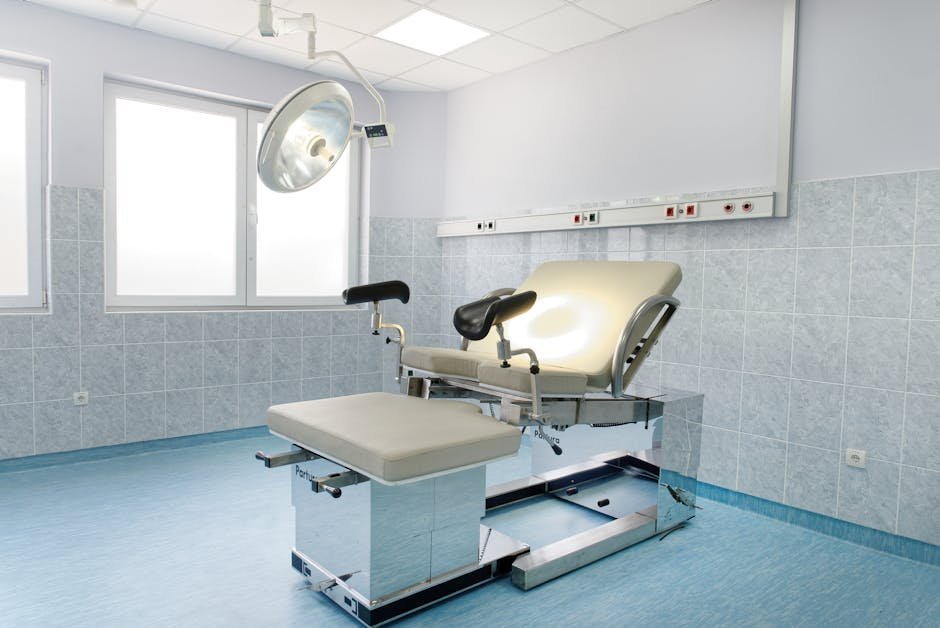
Survivors deciding what to do in the first hours often do not need a triage algorithm; they need a calm voice. The National Sexual Assault Hotline at 800-656-HOPE (4673), run by RAINN, routes callers to the nearest local rape crisis center and stays on the line through 911 calls or hospital intake if requested. The hotline is free, available around the clock, and does not require disclosing identifying information. For survivors uncertain about reporting, calling RAINN first is reasonable; the operator can explain what a SANE exam involves and how forensic evidence can be collected and stored without immediate police involvement in many states.
If there are physical injuries, suspected drugging, ongoing danger, or a need for emergency contraception or HIV PEP, the priority is a hospital with a SANE program. Survivors who are unsure whether they want to file a report can still receive a forensic exam in most states; jurisdictions vary on storage timelines, but kits collected during a “Jane Doe” or “non-report” exam are typically held for at least twenty years under federal guidance from the Office of Justice Programs.
SANE-trained nurses: what they actually do
A Sexual Assault Nurse Examiner is a registered nurse with specialized certification in forensic evidence collection, trauma-informed assessment, and survivor-centered care. SANE programs grew out of the recognition that traditional emergency department workflows, optimized for acute medical triage, often retraumatized survivors and produced inferior forensic evidence. A SANE exam typically takes between two and six hours and includes a careful medical history, head-to-toe injury documentation, photography with the survivor’s consent, swabs and samples that comprise the sexual assault evidence kit, and offered prophylaxis for sexually transmitted infections, HIV, and pregnancy.
Crucially, SANE nurses separate medical care from evidence collection. A survivor can accept all medical interventions, decline the kit, and still leave with documented care. The reverse is also true. Survivors are not obligated to report to law enforcement to receive a forensic exam; the Violence Against Women Act funds non-report exams in every state.
Evidence collection vs. medical care: the parallel tracks
Conflating these tracks is one of the most common failures in non-SANE emergency departments. A trauma-informed clinician explicitly names them. Medical care is time-sensitive in different ways than forensic care. HIV PEP is most effective when started within seventy-two hours, ideally within twenty-four. Emergency contraception (levonorgestrel or ulipristal) works best within five days. Tetanus, hepatitis B, and gonorrhea/chlamydia prophylaxis follow standard wound and STI protocols.
- HIV PEP: 28-day course, ideally within 24 hours, no later than 72.
- Emergency contraception: levonorgestrel up to 72 hours; ulipristal up to 120.
- STI prophylaxis: ceftriaxone, doxycycline, metronidazole as indicated.
- Hepatitis B vaccine or HBIG if status unknown.
- Forensic kit: optimal within 96 hours; some jurisdictions accept up to 7 days.
Acute Stress Disorder assessment in the first 30 days
Acute Stress Disorder, defined in DSM-5-TR, applies when characteristic post-traumatic symptoms persist between three days and one month after exposure. Symptoms span five clusters: intrusion (flashbacks, nightmares), negative mood, dissociation (depersonalization, amnesia), avoidance, and arousal (hypervigilance, sleep disturbance, irritability, exaggerated startle). Nine or more symptoms across these clusters meet the threshold. ASD is not predictive of PTSD in a deterministic sense; many survivors meet ASD criteria and never develop PTSD, while some who appear stoic in week one decompensate later. For a fuller comparison of these diagnoses, see our guide to ASD versus PTSD.
Screening tools like the Acute Stress Disorder Scale (ASDS) and the PTSD Checklist for DSM-5 (PCL-5) help quantify symptom burden but should never replace clinical conversation. Many survivors normalize symptoms or minimize them out of shame. A sensitive clinician asks open-ended questions about sleep, intrusive memories, dissociative episodes, and safety.
The harm-reduction approach to early intervention
Decades of research have produced a counterintuitive consensus: aggressive emotional debriefing in the first days after trauma can worsen outcomes. Critical Incident Stress Debriefing (CISD), once standard for first responders and survivors, is now considered contraindicated by major guideline bodies. Pushing survivors to recount the assault in detail before they are ready can consolidate traumatic memory and increase the likelihood of PTSD.
What is supported is Psychological First Aid (PFA): meeting basic needs, restoring safety, providing accurate information, connecting survivors to support, and respecting their pace. PFA does not require a clinical degree. Advocates from rape crisis centers are often trained in it. The principle is simple: stabilize, do not excavate.
When symptoms persist: TF-CBT and Prolonged Exposure
If symptoms remain disabling after two to four weeks, evidence-based trauma-focused therapies become appropriate. Trauma-focused cognitive behavioral therapy (TF-CBT) and Prolonged Exposure (PE) are the most rigorously studied. PE, developed by Edna Foa, uses imaginal exposure to the traumatic memory and in-vivo exposure to avoided but safe situations to extinguish conditioned fear responses. Cognitive Processing Therapy (CPT) is another first-line option, particularly when the survivor is preoccupied with self-blame, distorted beliefs about safety, or shame.
Pharmacotherapy in the acute phase is generally limited to short-term sleep aids if needed and SSRI initiation if depression is prominent. Benzodiazepines in the acute window are associated with worse PTSD outcomes and should be avoided when possible. For deeper exploration of trauma therapy, our overview of evidence-based PTSD treatments covers each modality.
Finding rape crisis centers and SAFE programs
Sexual Assault Forensic Examiner (SAFE) programs are hospital-based teams that include SANE nurses, advocates, and on-call clinicians. Not every emergency department has one. Survivors can locate the nearest SAFE program through RAINN’s online database or by calling 800-656-HOPE. Rural areas often rely on telehealth-supported SANE programs in which a remote certified nurse guides a local clinician through the exam by video. These telehealth models have improved access dramatically since 2018.
Local rape crisis centers, almost always non-profit and confidential, provide advocates who can accompany survivors to the hospital, to police interviews, and to court. Their services are free. Many also offer support groups, individual counseling, and legal advocacy. RAINN’s affiliate directory connects callers to roughly 1,000 such centers nationwide.
The legal reporting decision and Title IX considerations
The choice to report to police is the survivor’s, with rare exceptions involving mandated reporters and minors. Many survivors take days or weeks to decide. Forensic kits collected during non-report exams preserve the option. Trained advocates can walk survivors through what filing a report involves: a recorded interview, possible photography, the realistic timeline of investigation and prosecution, and rights under VAWA and state victim-services statutes. Visit the Office of Justice Programs for federal resources on victim rights and compensation.
On college and university campuses, Title IX adds a parallel administrative track. Survivors of campus assault can pursue Title IX investigations, criminal complaints, both, or neither. Title IX coordinators are required at every federally funded school. The 2024 federal regulations restored some protections that had been narrowed in earlier years. Confidential resources on campus, typically the counseling center and licensed advocates, do not trigger reporting obligations; speaking to a professor or resident advisor often does. For mental health support during campus crises, our campus crisis resources guide outlines confidential and reporting options.
Frequently asked questions
Do I have to report to police to get a SANE exam?
No. Federal law funds non-report sexual assault forensic exams in every state. Survivors can have evidence collected and stored, then decide later whether to release it to law enforcement. Storage timelines vary by jurisdiction.
How long after the assault can a kit still collect useful evidence?
Most jurisdictions accept kits up to ninety-six hours, and many extend to seven days for certain samples. Sooner is better, but a delayed exam can still yield evidence; a SANE nurse can advise on viability for a specific situation.
Will the hospital make me talk to police?
Generally no, with state-specific exceptions for minors and certain injuries. Survivors should ask the SANE nurse to clarify local mandatory reporting laws on arrival. Advocates can help interpret these rules.
Should I shower or change clothes before going to the hospital?
Ideally not, because evidence may be lost, but having done so does not disqualify a survivor from a forensic exam. Bringing the clothing in a paper bag is preferable to a plastic one if it has been removed.
Is therapy required after sexual assault?
No. Many survivors recover with social support and time. Therapy is recommended when symptoms persist beyond a month, interfere with functioning, or include suicidal thoughts. Evidence-based modalities like PE, CPT, and TF-CBT have strong outcomes when used.
The bottom line
Acute care after sexual assault is a coordination of safety, medical prophylaxis, forensic options, and mental health support, ideally led by a SANE-trained team that respects the survivor’s pace. The first call can be RAINN at 800-656-HOPE, the first stop can be a hospital with a SAFE program, and the first principle is autonomy. Aggressive emotional debriefing causes harm; psychological first aid does not. Evidence-based therapies become appropriate when symptoms persist, but the first thirty days are about stabilization, not excavation. Read more about RAINN’s survivor resources for additional guidance.
If you are in crisis
If you or someone you love is in immediate danger or experiencing thoughts of suicide, call or text 988 to reach the Suicide and Crisis Lifeline, available 24/7. For sexual assault support, call 800-656-HOPE (4673).
This article is for informational purposes only and is not a substitute for professional medical, legal, or mental health advice. Always consult a qualified clinician or advocate for guidance specific to your situation.