Marcus from Tucson had tried three antidepressants over four years. His new psychiatrist did something the others had not. She wrote a real exercise depression prescription on a pad with her DEA number at the top: “Moderate-vigorous exercise, 150 minutes weekly, four sessions, beginning week one.” She also referred him to a behavioral health exercise physiologist who would meet with Marcus three times to set the program. He laughed in the parking lot and texted a photo of the slip to his sister. Six weeks later he was sleeping through the night, the morning dread had thinned, and his Patient Health Questionnaire-9 score had dropped from 18 to 9. He had not changed his medication. He had started lifting weights twice a week and jogging at an intensity that left him unable to hold a full conversation. The dose mattered. So did the structure.

A real exercise depression prescription is not the same thing as a doctor telling you to “get more active.” It is a structured, dose-specific intervention with measurable parameters: frequency, intensity, time, type, and progression. The evidence has grown from interesting to overwhelming, and a 2024 network meta-analysis in the BMJ placed several exercise modalities on par with frontline antidepressants for mild and moderate depression. Most primary care visits still default to the casual suggestion of a daily walk, an instruction that fails because intensity is too low and there is no accountability scaffold across the first six weeks, when adherence collapses.
The SMILES trial and what came after
The SMILES trial gets cited so often for diet that people forget exercise has its own equivalent body of work. Felice Jacka’s nutrition study put behavioral medicine on the map for depression, but parallel exercise trials have been replicating findings since the early 2000s. The TREAD study at UT Southwestern, the DEMO trials in Denmark, and a series of Australian investigations all converged on the same finding. Aerobic exercise of sufficient intensity, sustained across at least eight to twelve weeks, produces clinically significant reductions in depressive symptoms with effect sizes that compare favorably to selective serotonin reuptake inhibitors. The 2023 update of the Cochrane review on exercise for depression, after years of methodological hand-wringing, concluded the effect is real and moderate.
The follow-up question matters more than the headline. How much exercise, of what kind, and at what intensity? The answer that has crystallized across guidelines from the American College of Sports Medicine and the World Health Organization is the 150-minute threshold. One hundred fifty minutes per week of moderate-intensity aerobic activity, or seventy-five minutes per week of vigorous-intensity activity, or an equivalent combination. Below that dose, mood effects are inconsistent. At or above that dose, the effects show up reliably in trial after trial. Our coverage of depression treatment options that work without medication walks through how this slots into a broader plan.
HIIT versus steady state, and why the debate is overstated
High-intensity interval training has had a moment in the depression literature, and the moment was earned. Several trials have shown HIIT produces comparable or slightly larger antidepressant effects than steady-state aerobic work in less total time. A typical protocol runs four to six bouts of three to four minutes at 85 to 95 percent of maximum heart rate, with active recovery periods, total session time around twenty-five minutes including warm-up. For someone whose barrier to adherence is time, this is a real advantage.
Steady-state work has not been displaced. A forty-five-minute brisk run, a forty-minute swim at a conversational pace where conversation is just barely possible, a forty-five-minute Peloton ride at high cadence, all produce the same mood adaptations when the total weekly volume hits the threshold. The choice between modalities should be driven by what the patient will actually do in week six, not by which study had the most elegant graph. People with severe deconditioning, joint problems, or cardiac risk factors usually need to start with steady state and graduate to intervals after eight weeks of base building.
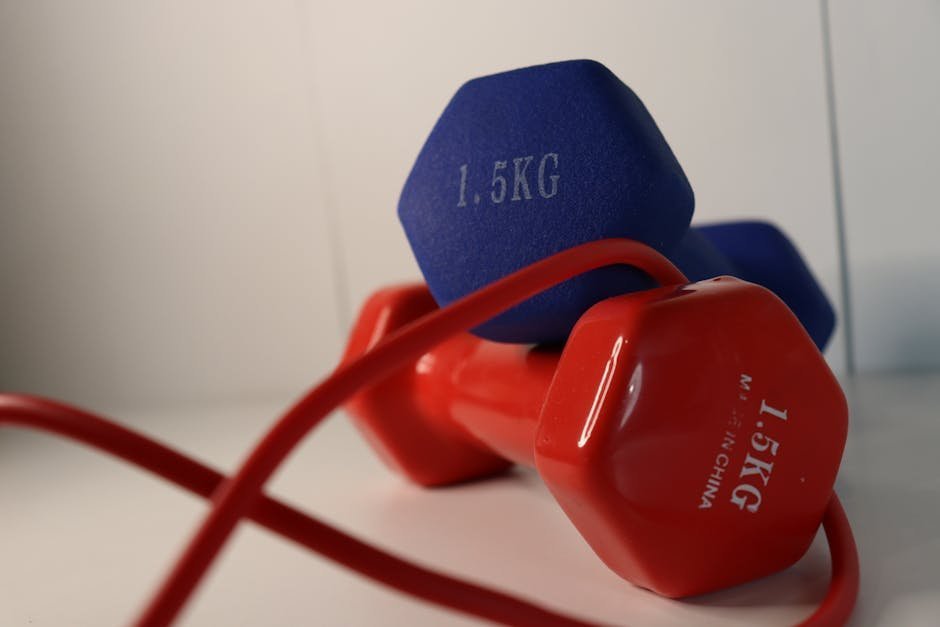
Resistance training has its own evidence, separate from cardio
The 2018 meta-analysis by Gordon and colleagues in JAMA Psychiatry, looking specifically at resistance training trials, found a moderate antidepressant effect that was independent of changes in muscle strength or aerobic fitness. People who did not get measurably stronger still experienced mood improvement. People who continued to be aerobically deconditioned still experienced mood improvement. Whatever resistance training is doing for depression, it is not just a side effect of being in better shape.
The minimum effective dose appears to be two sessions per week, working all major muscle groups, at intensities that bring the working muscles to near-failure within eight to twelve repetitions. Bodyweight progressions count if they are programmed seriously, with regression and progression rules. The popular notion that lifting heavy weights is somehow incompatible with mental health treatment, that it requires already being a confident gym-goer, has not survived the trial data. Older adults, women new to lifting, people with no athletic history at all, all show the same response curves when they actually do the work.
Effect sizes compared to SSRIs, honestly
Network meta-analyses are not the final word, but they do let us put exercise next to drug treatment in a structured way. The 2024 BMJ network meta-analysis ranked walking, jogging, yoga, strength training, and mixed aerobic plus strength regimens against SSRIs and against psychotherapy for adult depression. Several exercise modalities, particularly higher-intensity interventions, produced effect sizes that were not statistically distinguishable from antidepressant medication.
Two cautions belong on this finding. The first is that exercise trials, like medication trials, are vulnerable to expectancy effects, and properly blinded exercise trials are essentially impossible. The second is that severe depression has consistently shown smaller exercise effects than mild and moderate depression in trials that stratified by severity. Patients with melancholic features, psychotic features, or severe psychomotor retardation are unlikely to mobilize for a structured exercise program without medication or other intervention to lift the floor first. For more on the broader question of when medication helps and when it does not, our piece on tapering off antidepressants safely takes the complementary angle.
Why “just go for a walk” advice often fails
The advice to walk more is not wrong. The advice to walk more without intensity guidance, without a frequency target, without a duration progression, and without any check-in is not a prescription. It is a wish. Several things go wrong predictably. The depressed patient walks twice in the first week, at a pace that is too slow to elevate heart rate, and reports back to the next appointment that “exercise didn’t help.” The pace was below the threshold. The frequency was below the threshold. There was no expectation that struggle should be present, so the patient interpreted the absence of struggle as evidence that the prescription was being followed.
A real walking prescription specifies a pace target, usually expressed as a heart rate range or as the talk test threshold (able to speak in short phrases, not in full sentences), a session duration that ramps over four to six weeks, and a weekly frequency. It also specifies a wearable or stopwatch as the verification tool, and a follow-up date. The same advice given without these elements gets followed at maybe twenty percent of the intended dose, and depression that does not improve gets blamed on biology that is actually just an undelivered intervention.

Formal exercise prescription programs and where to find them
A growing number of academic medical centers run behavioral health exercise prescription clinics, sometimes housed in physical medicine, sometimes in cardiology, occasionally in psychiatry. The American College of Sports Medicine maintains a registry of clinical exercise physiologists, and many of them work in integrated mental health settings. Insurance coverage is uneven, and the most common path to coverage is a referral linked to a comorbid condition such as obesity, prediabetes, or hypertension that already triggers covered services.
For patients without access to a clinical program, structured options include cardiac rehab style programs offered by community hospitals, YMCA medically based fitness centers with health-condition tracks, and a small number of digital programs that integrate with primary care to provide accountability. The non-negotiable elements are baseline assessment, weekly mileage or session targets, intensity verification, and a six-to-eight-week reassessment.
Gym phobia, home alternatives, and the social barrier
For a meaningful subset of depressed patients, the gym is not a neutral environment. Body image concerns, social anxiety, prior bullying, the sense of being watched while struggling, all generate avoidance that is not laziness and is not solved by motivational pep talks. The home alternatives are good enough to hit therapeutic doses if they are programmed seriously. A treadmill or stationary bike, a basic dumbbell set spanning fifteen to fifty pounds, a pull-up bar or resistance bands, and a phone app with prescribed sessions can deliver the entire prescription without crossing the threshold of a commercial gym.
Outdoor walking, jogging, or cycling routes, mapped in advance to avoid high-traffic encounters, work for many patients with social avoidance. Group classes such as small-format strength studios, where the instructor knows your name and the class size is capped, sometimes work where commercial gyms do not. The fit between modality and patient temperament gets engineered, not assumed. Patients who try to white-knuckle their way into a hostile environment for the sake of evidence-based treatment usually drop out by week four.
Adjunct, monotherapy, and maintenance after remission
Exercise as monotherapy is reasonable for mild and moderate depression in patients who can mobilize for the prescription. As an adjunct to medication or psychotherapy, the additive effect is consistent. As maintenance after remission, exercise has a more interesting role. Patients who continue at the 150-minute threshold after responding to an SSRI relapse less often than patients who taper their activity once they feel better, and the maintenance protective effect approaches the protective effect of staying on medication in some long-term observational data. This is part of why our overview of building a relapse-prevention plan places sustained physical activity near the top of the actionable list.
The Centers for Disease Control and Prevention publishes the federal physical activity guidelines, including the 150-minute threshold and the resistance training recommendation, on its physical activity basics resource. The National Institutes of Health has compiled a separate plain-language guide to exercise for mood and brain health through its consumer health information portal, including exercise as a first-line option for several mood and anxiety presentations.
Frequently asked questions
How long until exercise actually changes my mood?
Acute mood lift after a single session is real and lasts hours. Sustained reductions in depression scores typically appear by week four and are usually clear by week six to eight. Patients who have not improved at twelve weeks despite hitting the dose should reassess with a clinician.
Can I split the 150 minutes any way I want?
Across at least three sessions, ideally four to five. Two ninety-minute weekend sessions do not produce the same response as four thirty-five-minute sessions, partly because consistency drives habit formation and partly because the acute mood-lift effect fades.
What if I have a heart condition or other medical issue?
Get medical clearance before starting a vigorous program. Cardiac rehab phase three or a clinical exercise physiologist can supervise the early weeks. Most cardiac, pulmonary, and metabolic conditions are compatible with structured exercise once cleared.
Should I stop my antidepressant if exercise is working?
Not unilaterally. Discuss with the prescriber, plan a structured taper, and keep the exercise dose at or above threshold throughout the taper window. Many patients reduce or discontinue medication successfully on this path; some find the floor drops without the medication and need to resume.
Is yoga or pilates enough?
Yoga has direct mood evidence, particularly for anxiety and mild depression. Pilates has less depression-specific data. Neither replaces the cardiovascular and resistance training prescription for moderate depression, though both make excellent additions and many patients find them more sustainable as habits.
The bottom line
An exercise depression prescription works when it is treated as a real prescription. The dose is 150 minutes per week of moderate-vigorous activity, or 75 minutes vigorous, plus two resistance sessions. Intensity matters more than enthusiasm, structure matters more than motivation, and the first six weeks decide whether the intervention sticks. Pair the prescription with accountability, with a follow-up date, and with a plan for the modality that fits the patient’s life rather than the textbook. The effect size is comparable to medication for mild and moderate depression, the side effect profile is favorable, and the maintenance benefit is real. The mistake is treating exercise as a vague self-care recommendation rather than as a clinical intervention with parameters.
If you are in a crisis, call or text 988 to reach the Suicide and Crisis Lifeline. Trained counselors are available around the clock. If life is not in immediate danger but you are struggling, your primary care clinician or a behavioral health professional can help build a treatment plan that may include an exercise prescription alongside other supports.
This article is for general information only and is not medical advice. Exercise programs should be discussed with a clinician, particularly if you have cardiovascular risk factors, joint or musculoskeletal issues, or are currently taking psychiatric medication. Individual response to exercise interventions varies, and the absence of response does not mean depression is untreatable.