Why Finding a Therapist Is Harder Than Finding a Cardiologist
The American mental health care system has produced an unusual paradox. There are more licensed therapists in the United States today than at any point in history, and yet finding the right one for an individual patient remains a process that most people describe as frustrating, opaque, and demoralising. People will report bouncing between three or four therapists before settling, or giving up entirely after the first attempt. The friction is real, and most of it is fixable with the right search strategy.
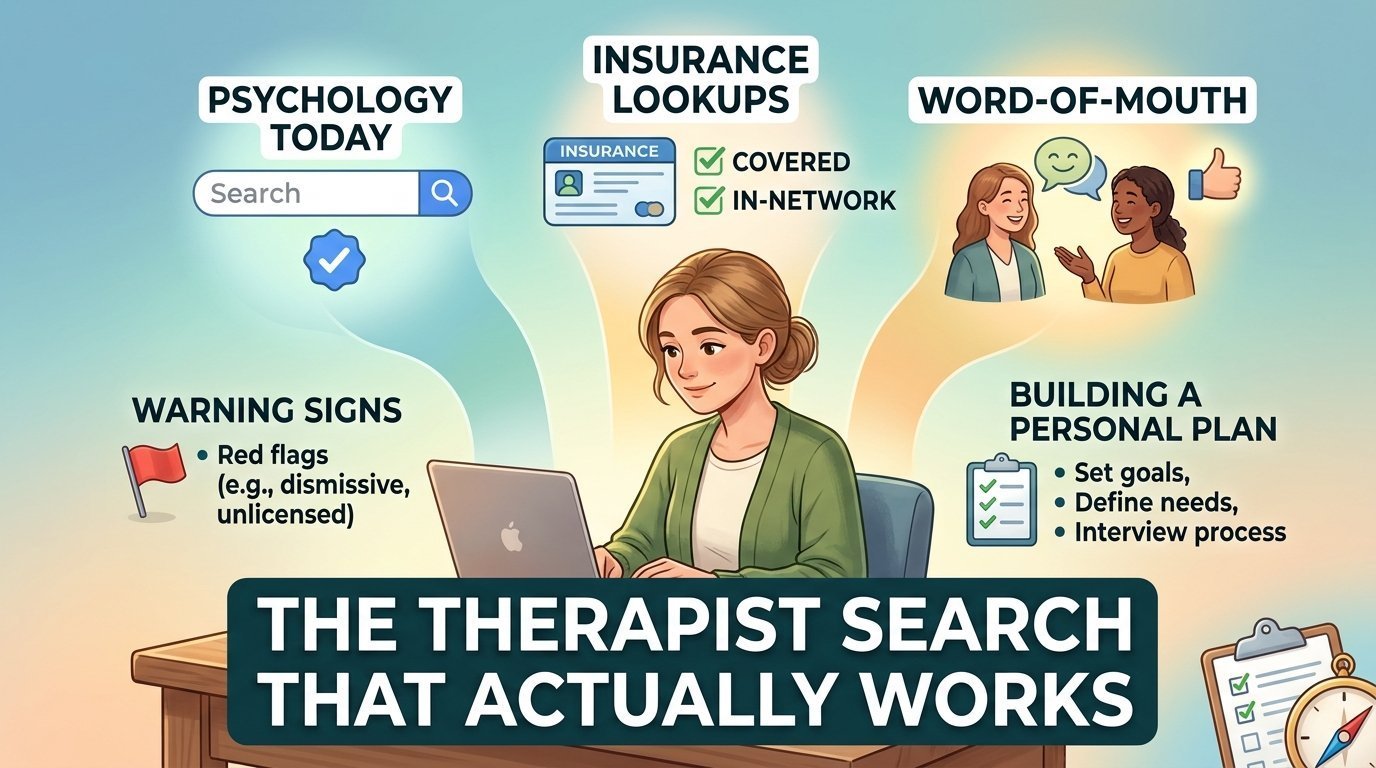
This guide describes the search process that actually works in 2026, drawing on the tools that have matured over the past decade. You will learn how to use Psychology Today’s directory effectively, how to query insurance lookup tools without burning hours on dead ends, how word-of-mouth referrals still beat algorithms in many cases, and how to combine all three into a practical search plan you can execute over a weekend.
Step One: Define Your Search Before You Open a Browser
Most people start by typing mental health providers near me into a search engine and scrolling. That approach maximises noise and minimises fit. Before searching, take fifteen minutes to write three things on paper. What you want help with, in your own words. What you would consider a good outcome after six months. What constraints matter most to you, including budget, schedule, in-person versus telehealth, gender or background of the therapist, and any specific therapeutic approaches you have heard about and want to try.
This list will guide every filter you apply later. Without it, you will accept the first available appointment and discover three sessions in that the therapist’s specialty does not match what you actually need. With it, you will reject mismatches in the first phone screen, before you have invested any time.
Psychology Today: The Directory Most Patients Use Wrong
Psychology Today’s therapist directory is the largest in the United States, with hundreds of thousands of profiles. Most users browse it the same way they browse Yelp, scrolling through photos and clicking on whoever has a friendly face and an open spot. That is not how the directory is designed to work.
The filters on the left side of any city’s results page are the entire point. Filter by your insurance plan first. Filter by your specific issue, whether that is depression, trauma, eating disorders, OCD, or relationship issues. Filter by treatment approach if you have a preference, such as cognitive behavioural therapy, dialectical behaviour therapy, EMDR, or psychodynamic. Filter by language, gender, faith, or cultural background if those matter to you. The combination of three or four filters typically reduces a city’s pool of two thousand therapists to twenty or thirty viable candidates.
Read each profile carefully. Therapists write their own descriptions, and the writing reveals more than the photo. Look for specific language about how they work and who they work with. Vague language about “helping you find your best self” is a yellow flag. Specific language about “treating complex PTSD using EMDR and Internal Family Systems for adult survivors of childhood trauma” is a green flag. The clinicians who write specifically tend to practice specifically.
Insurance Lookup Tools: Slow but Worth Using
If you are using insurance, the next step is to verify the candidates from your Psychology Today shortlist against your insurer’s provider database. Major networks behind UnitedHealthcare therapists, Aetna, Cigna, Blue Cross Blue Shield, and Optum behavioural health each run a member-facing directory. The directories are slow, occasionally outdated, and notorious for listing therapists who no longer accept new patients. They are also the only authoritative source for in-network status.
Cross-check every candidate. A therapist’s Psychology Today profile may say they accept your plan. The insurer’s directory may not list them. The truth is usually that the therapist accepts the plan via a different sub-network or has not been re-verified in eighteen months. The only resolution is to call the therapist’s office and ask: Are you currently in network with my specific plan, and are you accepting new patients with this plan? Many candidates will be eliminated at this step. The remaining ones are real options.
An hour of cross-checking saves weeks of misadventure. The reverse approach, where you start with the insurer’s directory and try to read therapist profiles inside it, almost always fails because insurer directories provide minimal profile information. Use the directories together: Psychology Today for fit, the insurer’s tool for verification.
Word of Mouth: Still the Best Single Channel
Despite the proliferation of digital tools, word-of-mouth referrals remain the highest-conversion path to a good therapy match. People who get a name from a friend, a coworker, a primary care doctor, or a previous therapist tend to stick with that therapist longer and report better outcomes than people who find a name through a directory.
Two specific kinds of referral are especially valuable. Your primary care physician likely has two or three mental health providers near me they regularly refer to and trust. Their referral list is gold because they have heard back from patients about whether the therapist was a good fit, and they have selected names accordingly. Ask your PCP at your next visit. Most will write a list on the spot.
The second valuable referral is from another therapist. If you have ever seen a therapist before, even briefly, even years ago, you can email them and ask for a referral that fits your current situation. Therapists maintain professional networks and know who specialises in what. They will often send you two or three names with a sentence each on why each name might be a fit for you specifically.
The Phone Screen: A Conversation You Should Always Have
Once you have three to five names that survive insurance verification, schedule a phone screen with each. Most therapists offer a free fifteen-minute call before the first paid session. Use it well. Ask three questions in the call: how would you describe your approach to a person presenting with what I am presenting with, what does the typical course of treatment look like for you, and what would make a person not be a good fit for working with you.
The third question is the most revealing. A therapist who says everyone can be a good fit is not honest. A therapist who says they are not the right fit for active substance use, severe eating disorders, or chronic suicidal ideation is telling you they know their practice limits. The latter is the kind of therapist you want.
Pay attention to your gut during the call. If the person’s voice, energy, or pacing feels wrong, listen to that signal. Therapy depends heavily on the relational fit, and a phone call is a low-cost preview of how that fit will feel. You are not obligated to book with anyone you spoke to. The screen is for you, not for them.
Booking the First Session and Knowing When to Switch
Book a first session with the therapist whose phone screen felt right. Treat the first three sessions as an extended evaluation period for the fit. After session three, ask yourself three questions. Did I feel heard. Do I have a sense of how this therapist intends to help me. Do I want to come back next week. If the answer to any of those is no, you can switch without guilt. Therapy mismatches are common, expected by clinicians, and not a failure of either party.
If the first three sessions go well, your search is done. The remaining work is the actual mental health care, which is harder than the search but vastly more rewarding. The search itself is a one-time investment of perhaps five hours, spread across a week or two, that determines the next several months or years of your treatment. The hours are worth spending.
This article is for educational purposes and does not constitute medical advice. If you are in crisis, call or text 988 in the United States. For coverage questions, contact your insurance plan directly using the member-services number on the back of your card.